Vortex
Accelerating scientific discovery, enabling engineering at the speed of thought, and collapsing R&D cycles. Powered by scientific computing and physical experimentation.
- Engineering Insights
- Physics-Informed ML
- Engineering Datasets
- Mesh Generation
- Adaptive Refinement
- Quality Optimization
- High-Fidelity Solvers
- Multi-physics Coupling
- HPC Orchestration
- Automated Analysis
- Visualization
- Report Generation
- Evolutionary Discovery
- Multi-point Optimization
- 3D Configurations
- Prototyping Feedback
- Quality Control
- Physical Validation
- Database Integration
- Characteristics
- Failure Modes
- Predictive Maintenance
- Health Monitoring
- End-of-Life Strategy
Platform Architecture
Three pillars powering autonomous engineering: tool orchestration, physics-based AI, and intelligent data management
CAE Orchestration
Unified API layer abstracting 50+ engineering tools with automatic format translation and workflow orchestration
Physics Foundation Models
Pre-trained on millions of simulations. Fine-tuned for your physics. Instant predictions with uncertainty quantification.
Engineering Intelligence
Contextual reasoning over engineering history, constraints, and domain knowledge for intelligent automation
Recursive Engineering
Intelligence
Emergent intelligence from recursive interaction between verifiable environments. Continuous learning enabled through computation and physical experimentation.
Verifiable Environments
Vortex environments provide basis for petabyte scale data curation, verification, and engineering grade accuracy. Every prediction is testable. Every output is falsifiable against ground truth.
Computational Physics
Simulation as RL environment
Autonomous Labs
Physical experimentation
Computational Physics
Deep multiphysics simulation serves as the primary RL environment. Every simulation produces verifiable outputs that can be compared against physical laws and experimental data.
Turbulence modeling, combustion, multiphase flows, RANS/LES/DNS
Structural mechanics, fatigue, fracture, nonlinear materials
Conjugate heat transfer, radiation, phase change, thermal stress
Antenna design, RF propagation, EMI/EMC, motor design
FSI, aero-thermal-structural, electro-thermal-mechanical
Physics-informed neural networks, operator learning, reduced order
Millions of design iterations without physical prototypes
Objective functions grounded in conservation laws
Comprehensive exploration of edge cases and failure mechanisms
High-fidelity data for neural network approximators
Learned heuristics and design rules from simulation
Confidence bounds on all predictions
Subsonic to hypersonic, PIV, pressure-sensitive paint, force balance
Static/dynamic loads, fatigue cycling, fracture mechanics, DIC
Environmental chambers, thermal cycling, IR thermography
Flight data recorders, sensor fusion, anomaly detection
Tensile, compression, hardness, microstructure analysis
In-situ monitoring, quality control, assembly verification
Real-world measurements for model calibration
Quantified model-reality discrepancies
Root cause investigation and forensics
Benchmark data for simulation verification
Process-property-performance relationships
Catalogued deviations and their signatures
Autonomous Labs
Vortex engineering intelligence over self-driving experimental facilities, operating 24/7, generating continuous streams of ground truth data.
Physical experiments provide the ground truth that simulation cannot. When models predict and reality measures, the delta becomes learning signal.
Recursive Engineering Intelligence
Verifiable Environments
Every prediction testable. Every output falsifiable.
Computational Physics
Autonomous Labs
Reinforcement Learning
Enabled Discovery
Engineering Superintelligence
Autonomous Engineer
End-to-end engineering automation from concept to validated design. Each stage operates autonomously while maintaining full traceability.
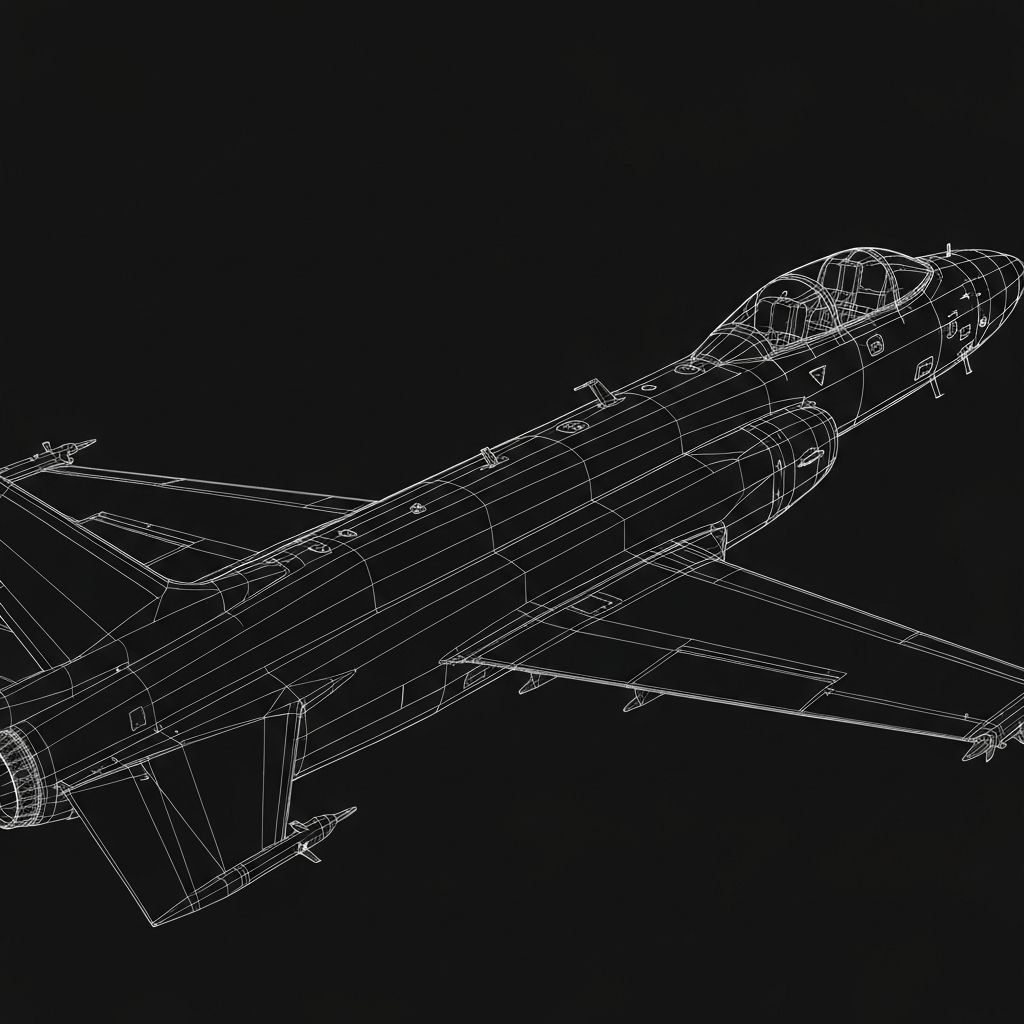
CAD Design Generation
Transform engineering intent into manufacturable CAD geometry through autonomous design synthesis. Our agents interpret specifications, constraints, and performance requirements to generate optimized 3D models ready for downstream analysis.
- Natural language to parametric CAD conversion
- Constraint-driven topology optimization
- Multi-objective generative design exploration
- Automatic feature recognition and extraction
- Design rule checking and DFM validation
- Version control and design lineage tracking
- STEP
- IGES
- Parasolid
- Native CAD
- Point Clouds
- STEP AP242
- STL/3MF
- Parasolid XT
- JT
- GLTF
- Parasolid
- OCCT
- CGAL
- Custom B-Rep
- Diffusion CAD
- Neural Implicits
- Graph Networks
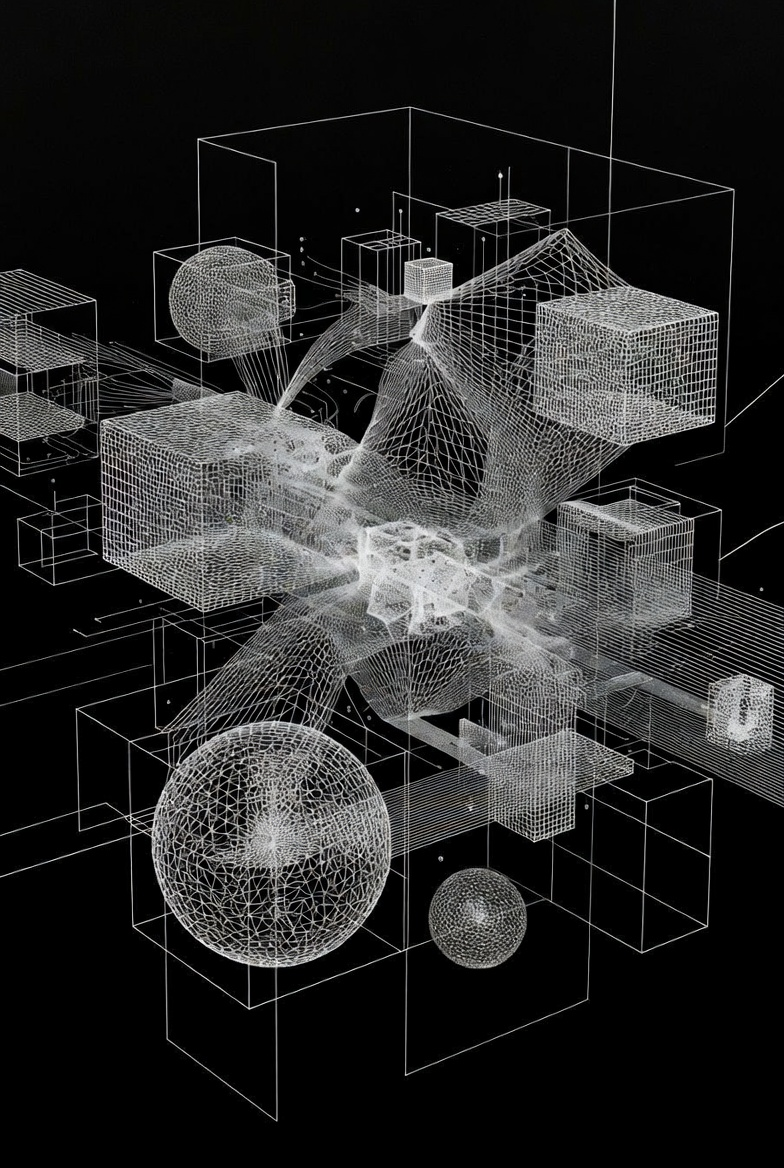
Meshing & Geometric Intelligence
Autonomous mesh generation that understands physics. Our preprocessing agents analyze geometry, predict flow features and stress concentrations, then generate simulation-ready meshes with appropriate refinement.
- Physics-aware adaptive mesh refinement
- Automatic boundary layer insertion for CFD
- Defeaturing and geometry cleanup automation
- Multi-domain mesh assembly and interfaces
- Quality metrics optimization and repair
- Mesh independence study automation
- Hex-dominant
- Polyhedral
- Tetrahedral
- Cartesian AMR
- OpenFOAM
- Star-CCM+
- Fluent
- CONVERGE
- Orthogonality
- Skewness
- Aspect Ratio
- Jacobian
- 1B+ cells
- Distributed meshing
- GPU acceleration
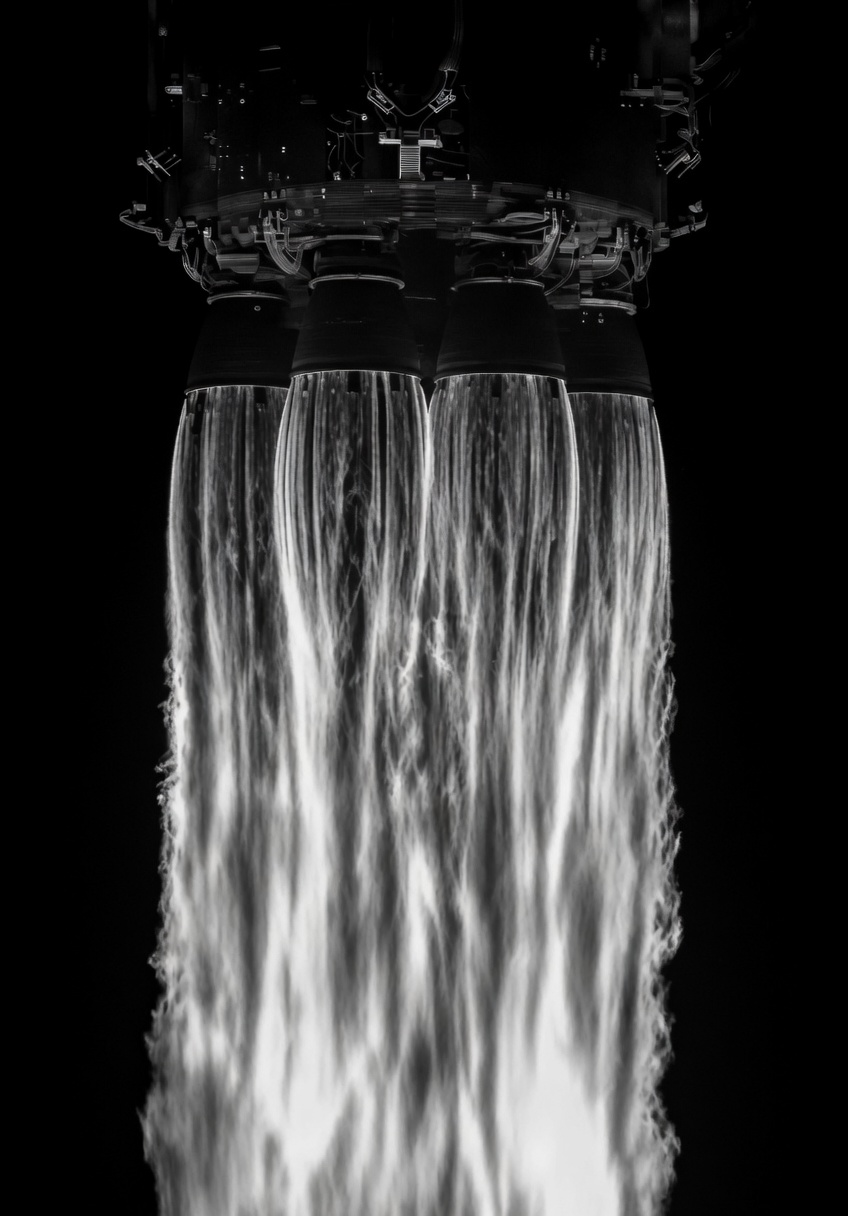
Simulation
Execute and orchestrate complex simulations across fluid dynamics, structural mechanics, thermal analysis, and coupled multiphysics. Our agents manage solver configuration, monitor convergence, and adaptively refine based on solution quality.
- Automated solver selection and configuration
- Real-time convergence monitoring and intervention
- Adaptive time-stepping and mesh refinement
- Multi-fidelity simulation orchestration
- Uncertainty quantification and sensitivity analysis
- HPC resource optimization and scheduling
- CFD
- FEA
- Thermal
- FSI
- Acoustics
- EM
- RANS
- LES
- DES
- DNS
- FEM
- BEM
- 10K+ cores
- Multi-GPU
- Cloud-native
- On-prem
- Hours not weeks
- Parallel campaigns
- Auto-restart
Postprocessing Intelligence
Transform simulation data into actionable engineering insights. Our postprocessing agents automatically extract key performance indicators, generate visualizations, identify anomalies, and produce comprehensive technical reports.
- Automated KPI extraction and trending
- Intelligent visualization generation
- Anomaly detection in flow fields
- Comparative analysis across design variants
- Natural language report generation
- Interactive 3D result exploration
- Streamlines
- Iso-surfaces
- Contours
- Vectors
- Animations
- FFT
- POD/DMD
- Statistics
- Correlation
- PDF Reports
- PowerPoint
- Web Dashboards
- APIs
- VTK
- CGNS
- EnSight
- Tecplot
- ParaView
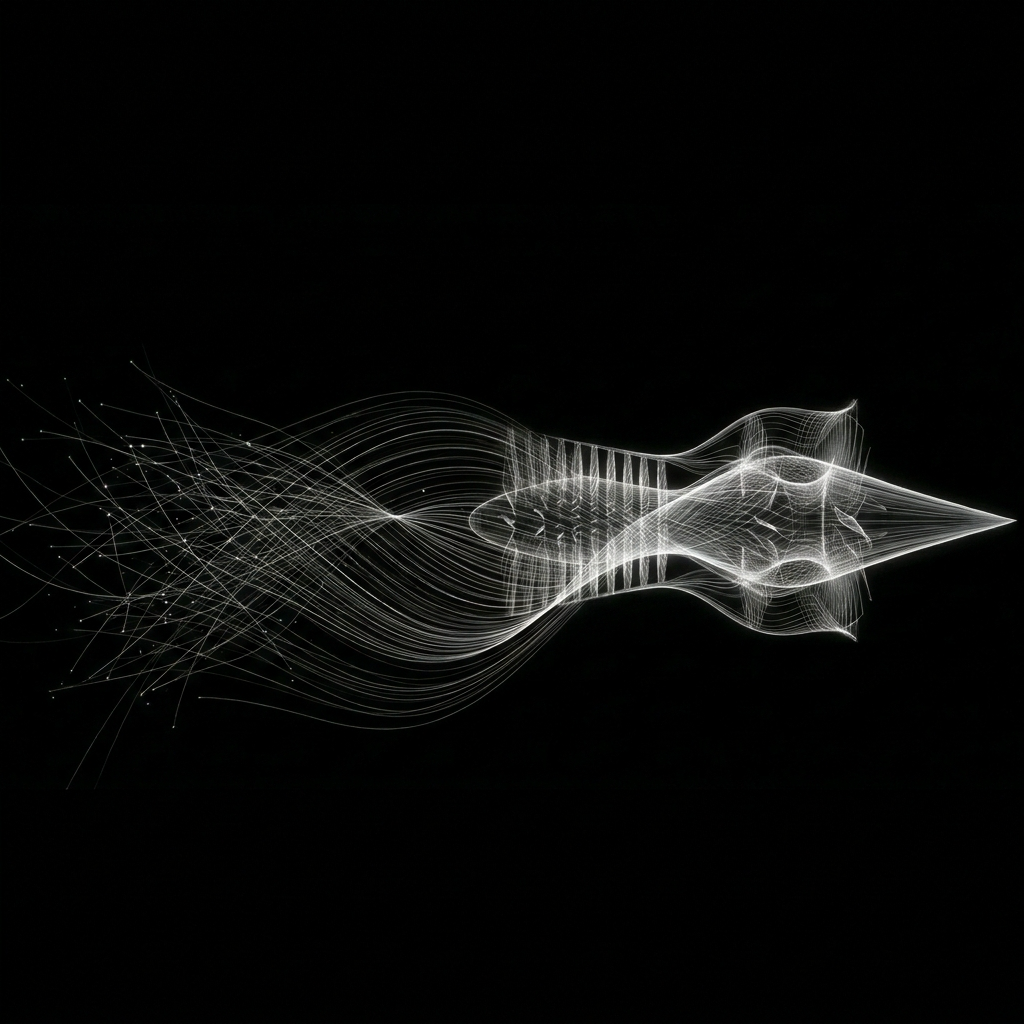
Design Discovery
Explore vast design spaces to discover optimal configurations. Our agents orchestrate parametric studies, surrogate modeling, and evolutionary optimization to find Pareto-optimal designs that balance competing objectives.
- Parametric sweep automation
- Surrogate model construction (GP, NN, RBF)
- Multi-objective evolutionary optimization
- Design of experiments generation
- Pareto frontier visualization
- Design space dimensionality reduction
- NSGA-III
- Bayesian Opt
- CMA-ES
- Gradient-free
- Gaussian Process
- Neural Networks
- Kriging
- PCE
- 1000s of designs
- Parallel evaluation
- Adaptive sampling
- Multi-point
- Multi-fidelity
- Robust
- Constrained
Operational Intelligence
Data Room
Vortex
Intelligence
Forward Deployed
Scientist / Engineer
Embedded with your team, working on your hardest problems.
Full data integration, finetuning, and Vortex deployment. Production-ready in a single day.
Scientific Foundation Models
Continuous data curation and foundation model development. Design and deployment of custom models.
Discovery
Our most powerful reasoning models run for days on your hardest open problems. Engineering design discovery, optimization, autonomous R&D.
Powered by Spinoza Labs